
The Catholic Defender: So let us confidently approach the throne of grace to receive mercy and to find grace for timely help
we can bring Him all our brokenness, mistakes, and needs to find help. God knows that we need help and it's in His presence, in fellowship with Him, and at His throne of grace that we find that help.
That is a beautiful and comforting truth. It captures the heart of spiritual restoration—that we don't have to "fix" ourselves before approaching God; the act of approaching Him is what brings the healing.
"come boldly to the throne of grace" to receive mercy and help in times of need
The word "boldly" (parresia in Greek) suggests freedom of speech and confidence, like a child approaching a loving parent.
Jesus acts as the "High Priest" who bridge the gap between God and humanity, making the throne accessible to everyone.
Brokenness and mistakes aren't obstacles; they are the exact reasons we are invited to come.
God isn't surprised by our needs; He already knows them and stands ready.
Help isn't found in self-reliance, but in presence and fellowship.
The Throne of Grace: This is a place of unmerited favor where we receive mercy instead of judgment
Hebrews 4:16: "Let us then approach God’s throne of grace with confidence, so that we may receive mercy and find grace to help us in our time of need."
Psalm 34:18: "The Lord is close to the brokenhearted and saves those who are crushed in spirit."
Matthew 11:28: "Come to me, all you who are weary and burdened, and I will give you rest."
Mercy: God not giving us the punishment we deserve.
Grace: God giving us the strength and blessings we don't deserve
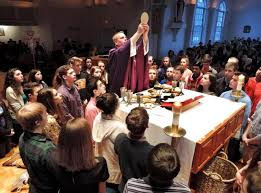
Pope Sixtus II (257–259) was the first to prescribe that Mass should be celebrated on an altar,
In the earliest churches in Rome the altar stood at the west end and the priest stood at the western side of the altar facing east and facing the people and the doors of the church.
The earliest altars for celebrating the Eucharist were of wood and identical in form with ordinary house tables, as was doubtless used at the Last Supper. The only such ancient wooden table still preserved is in the Lateran Basilica,
God is now ruling in the power of His love and we have access to that power.
There are four kinds of grace:
(1) Saving grace (Ephesians 2:8-10);
(2) Sanctifying grace (2 Corinthians 9:8);
(3) Sustaining grace (2 Corinthians 12:8-9); and
(4) Serving grace (Hebrews 12:28).
This grace is always available and adequate, and it is ours for the taking.


Comments