
The Catholic Defender: Agreements between Pope Leo IV and President Trump
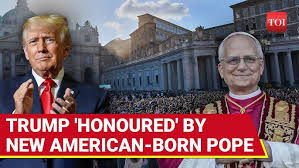
As of March 31, 2026, there are no formal agreements between Pope Leo XIV and President Donald Trump. Instead, their relationship is characterized by significant diplomatic tension and public disagreement on several key global issues.
Relations between the Vatican and the Trump administration have become increasingly strained due to the following developments
Rejection of the "Board of Peace": Pope Leo XIV officially declined an invitation from President Trump to join his newly formed "Board of Peace," an international peacekeeping body originally focused on Gaza reconstruction. The Vatican stated that such international crises should be managed through the United Nations rather than individual state-led forums.
Declined U.S. Visit: The Pope turned down an invitation delivered by Vice President JD Vance to visit the United States in 2026 for the country’s 250th anniversary. Instead, he announced plans to visit the Italian island of Lampedusa on July 4th to stand in solidarity with migrants, a move widely interpreted as a critique of the administration's immigration policies.
Opposition to the Iran War: The Pope has been a vocal critic of the U.S.-led military operations in Iran, which he has described as "atrocious violence" and a "scandal to the whole human family". He has repeatedly called for an immediate ceasefire and urged President Trump to find an "off-ramp" to the conflict.
Criticism of Immigration Policy: Pope Leo XIV, the first American-born pontiff (a Chicago native), has condemned the Trump administration's treatment of migrants as "inhuman" and "extremely disrespectful". He has specifically challenged efforts related to mass deportations and the ending of birthright citizenship.
U.S.-Europe Alliance: The Pope criticized remarks made by the President regarding Europe, stating that attempting to broker peace talks without including European allies is "unrealistic" and threatens a vital long-standing alliance.
While President Trump has expressed a general openness to meeting with the Pope, no such meeting or direct dialogue has occurred to date.
As of March 31, 2026, while Pope Leo XIV and President Trump remain at a diplomatic impasse, several specific peace proposals and frameworks have emerged that could serve as the basis for a potential dialogue:
The Pope's Proposal: On March 31, 2026, Pope Leo XIV explicitly urged President Trump to find an "off-ramp" to end the conflict before Easter. He has proposed a return to "reasonable, genuine, and responsible dialogue" rather than mutual threats.
Trump’s Negotiating Position: President Trump has stated he is in negotiations and "wants to make a deal," but requires Iran to commit to the "secret words": "We will never have a nuclear weapon".
The 20-Point Plan: In late 2025, Pope Leo XIV called President Trump’s 20-point Gaza peace plan "realistic" and urged Hamas to accept it.
Points of Discussion: They could discuss the transition of Gaza's governance to a temporary body, which the plan suggests could be headed by Trump and former UK Prime Minister Tony Blair.
Humanitarian Concerns: The Pope would likely push for the protection of the Global Sumud Flotilla and other humanitarian aid efforts that the Trump administration has viewed with caution due to security concerns.
A significant point of friction is the Vatican's refusal to join Trump's "Board of Peace".
The Conflict: The Vatican declined participation because it prefers multilateral institutions like the United Nations, while Trump’s Board is a state-led initiative.
The Proposal: A compromise could involve restructuring the Board to include formal UN oversight or transforming it into a "Contact Group" that respects the Vatican's centuries-old policy of "positive neutrality".
The Discussion: As the first American Pope, Leo XIV has condemned mass deportations as "inhuman". He could propose a "migrant-first" security plan for the Western Hemisphere that focuses on stabilizing home countries to prevent mass migration, an interest mentioned in the White House's 2025 National Security Strategy.
As of March 2026, Catholic voters in the U.S. generally maintain a high favorability toward Pope Leo XIV while simultaneously supporting many of President Trump’s policies, creating a notable "disconnect" between the faithful and Church leadership on specific issues like immigration.
High Papal Popularity: Pope Leo XIV remains highly popular, with a 70% to 84% favorability rating among U.S. Catholics. In March 2026, he was ranked as the most esteemed public figure in the U.S., with a net favorability (+34) higher than both President Trump and Vice President JD Vance.
Support for Trump: Despite the Pope's high personal ratings, a majority (52%) of Catholic voters also hold a favorable view of President Trump.
Voter Response: Roughly 54% of Catholic voters support the detention and broad-scale deportation of unauthorized immigrants, directly contrasting with the Pope's position.
The Pope’s refusal to join the Board of Peace and his demands for a ceasefire in the Middle East have drawn mixed reactions. While progressive Catholics view his stance as a moral imperative, some conservative voices, such as podcaster Jesse Romero, have argued the Pope should "stay in his lane" regarding government policy.
Mass Attendance: Regular Mass-goers are significantly more likely to support Trump's deportation policies (75%) compared to those who attend less frequently (45-49%), showing a further divide between the most active parishioners and the Vatican's official stance.


Comments