
The Catholic Defender: William Hensworth Podcast answers the Question on Sola Scriptura
Catholic Convert William Hensworth will examine this question on today's Podcast the early church to show that Sola Scriptura was something foreign to them. Many Protestants will throw out quotes in defense of the position, but a deeper reading ito the father, or even the same document, shows this is not the case,
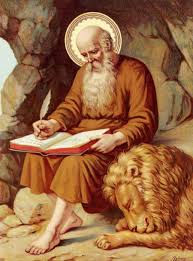
On September 30, the Church celebrates Saint Jerome, considered one of the most erudite Fathers of the Western Church. He is the Saint who put all his vast erudition at the service of Sacred Scripture. The Vulgate, the first complete Latin translation of the Bible, represents the most challenging effort Jerome faced.
"The term "Vulgate" - or also "Volgata" in Italian - which means "common", indicates the version commonly used in the Latin Church. The Vulgate grew out of the work and genius of St. Jerome."
St. Jerome spent 34 years in the Holy land and 15 more years in Rome translating the Sacred Scripure into Latin called the "Latin Vulgate", St. Jerome retired to the desert near Antioch, the cradle of Christianity, living in penance. Then, having become a priest, he began an intense literary activity: in Rome he worked with Pope Damasus. After Pope Damasus death, Jerome retired to Bethlehem. In 386 St. Jerome settled near the Basilica of the Nativity to dedicate himself to the study of the Bible. The famous Latin version, which later became official in the Western Church, was of great importance for the transmission of the Scriptures. Going down the stairs of the Basilica of Saint Catherine we find a set of caves, all very close to each other. One, the main one and the most important, is the cave of the Nativity, the place of Jesus' birth. Next to it there is also the cave of Saint Jerome.
St. Anthanasius composed a list of the biblical canon as early as 367 A.D. which became the 73 books of the complete bible. Ultimately, Pope Damasus (A.D. 384-399) called for a council, later named ‘The Council of Hippo’ to tackle this problem. There were three basic criteria that the Church prayed over the Canon.
The writings had to be associated with an Apostle
They had to have wide circulation in the Liturgy
They must have had consistency in theology
The men of God at the Council of Hippo examined hundreds of the known writings regarding the Church. Then, they compiled the list of inspired (God-breathed) books. The result, the inclusive books, became known as the New Testament.
In 397 at the Council of Carthage, the Bishops ratified the Council of Hippo, and again at the Council of Florence beginning in 1431 A.D.
St. Jerome spent 34 years in the Holy land and 15 more years in Rome translating the Sacred Scripure into Latin called the "Latin Vulgate", St. Jerome retired to the desert near Antioch, the cradle of Christianity, living in penance. Then, having become a priest, he began an intense literary activity: in Rome he worked with Pope Damasus. After Pope Damasus death, Jerome retired to Bethlehem. In 386 St. Jerome settled near the Basilica of the Nativity to dedicate himself to the study of the Bible. The famous Latin version, which later became official in the Western Church, was of great importance for the transmission of the Scriptures. Going down the stairs of the Basilica of Saint Catherine we find a set of caves, all very close to each other. One, the main one and the most important, is the cave of the Nativity, the place of Jesus' birth. Next to it there is also the cave of Saint Jerome.
"St. Jerome lived almost 40 years in Bethlehem: he arrived around 386 from Rome together with Paula, Eustochius and other companions. Jerome's brother also accompanied him. They settled in Bethlehem and never left. Before settling in Bethlehem, St. Jerome says that himself, Paula and the others visited all the other holy places in Palestine, but they never returned there a second time."


Comments