
The Catholic Defender: Jesus found in the Book of Malachi
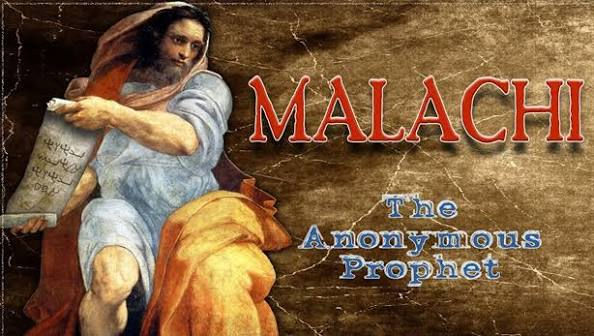
In the Book of Malachi, the final book of the Old Testament, Jesus is not mentioned by his historical name, but he is vividly revealed through prophetic titles, roles, and promises that anticipate his coming
Written roughly 400 years before Christ's birth, Malachi serves as a strategic bridge directly linking the Old Testament expectations with the New Testament arrival of Jesus.
The Lord of the Temple & Messenger of the Covenant
In Malachi 3:1, the text introduces two distinct upcoming figures:
The Preparing Herald: God promises, "Behold, I send my messenger, and he will prepare the way before me." In the New Testament, Jesus explicitly quotes this verse in Matthew 11:10 to identify John the Baptist as this specific messenger.
The Coming Messiah: The prophecy continues, "And the Lord whom you seek will suddenly come to his temple; and the messenger of the covenant in whom you delight, behold, he is coming..." This "Lord" who owns the temple is recognized as Jesus, who literally entered and cleansed the temple during his earthly ministry.
The Refiner's Fire and Fullers' Soap
Malachi 3:2-3 describes the Messiah not just as a gentle savior, but as a standard of holiness:
The Purifier: He is compared to a "refiner's fire and like fullers' [laundry] soap."
The Standard: Instead of destroying his people, he sits to purify them like gold and silver. Scholars point to Jesus as this Refiner who cleanses human hearts, making believers righteous before God.
The Sun of Righteousness
The ultimate description of Christ in this book arrives at its very conclusion:
Healing Imagery: Malachi 4:2 declares, "But for you who fear my name, the sun of righteousness shall rise with healing in its wings."
Fulfillment: Christians interpret this as a direct image of Jesus Christ breaking through the darkness of sin and spiritual exile to bring light, ultimate hope, and spiritual healing to humanity.
The "400 years of silence"—also known as the Intertestamental Period—refers to the span of time between the last Old Testament prophet, Malachi (c. 430–397 BC), and the birth announcements of John the Baptist and Jesus Christ (c. 4 BC). While the period is called "silent" because no new scripture was written and no prophetic voice spoke on behalf of God to Israel, it was actually a time of massive geopolitical upheaval, cultural transformation, and rapid historical preparation.
The major historical shifts that happened behind the scenes paved the way for the New Testament world.
The Persian Period (Ending c. 331 BC): The Old Testament ends with Persia in power. The Jewish people had returned from Babylonian exile, rebuilt Jerusalem, and restored the temple, but they remained a small, subject province.
The Grecian Period (c. 331–143 BC): Alexander the Great conquered the Persian Empire. This brought Hellenization (the forced spread of Greek culture, philosophy, and language) to the entire Mediterranean world.
The Hasmonean (Maccabean) Period (c. 143–63 BC): Tired of Greek oppression, a family of Jewish priests led by Judas Maccabeus staged a successful guerilla revolt. They won independence for Israel, cleansed the defiled temple (an event celebrated today as Hanukkah), and established a temporary Jewish kingdom.
The Roman Period (Starting c. 63 BC): Internal Jewish political infighting allowed Roman General Pompey to conquer Jerusalem. By the time Jesus was born, the ruthless Herod the Great was placed on the Judean throne as a puppet king representing Rome.
Cultural & Religious Developments
The Judaism seen at the end of Malachi looks radically different from the Judaism seen in the Gospels. During the silence, several critical cultural foundations were laid:
The Septuagint (LXX): Because Greek became the universal language, the Hebrew Scriptures were translated into Greek around 250 BC. This meant non-Jews could finally read God's word, and early Christians later used this translation to preach the Gospel across the empire.
Rise of the Synagogue: With Jews scattered all over the world (the Diaspora) and unable to travel to the Jerusalem temple regularly, local synagogues emerged as the new community hubs for scripture reading, prayer, and education.
Emergence of Religious Factions: The political and theological divisions during the Maccabean era birthed the strict, law-abiding Pharisees, the aristocratic, temple-controlling Sadducees, and the Zealots, who wanted to overthrow Rome by force.
The Sanhedrin: A high court of 71 Jewish elders and priests was formed to govern civil and religious matters under Roman rule.
Setting the Stage for the Messiah
How the 400 Years Prepared the World
Hellenization provided a single, universal language (Greek), allowing the New Testament to be written and instantly understood across different countries.
The Roman Empire established the Pax Romana (Roman Peace), reducing regional wars and piracy, making safe international travel possible.
Rome built an unprecedented, advanced network of paved roads, which the early apostles used to travel and spread the Gospel quickly.
Centuries of foreign oppression and spiritual famine (prophesied in Amos 8:11) left the Jewish people desperately crying out and watching for the promised Messiah.
The 400 years of silence ended abruptly when the angel Gabriel appeared to Zacharias in the temple, announcing the birth of John the Baptist—the literal "messenger" Malachi promised would prepare the way for the Lord.


Comments