
The Catholic Defender: The Forces of Darkness are everywhere as presenting itself this latest Election cycle, Pray the Rosary for America
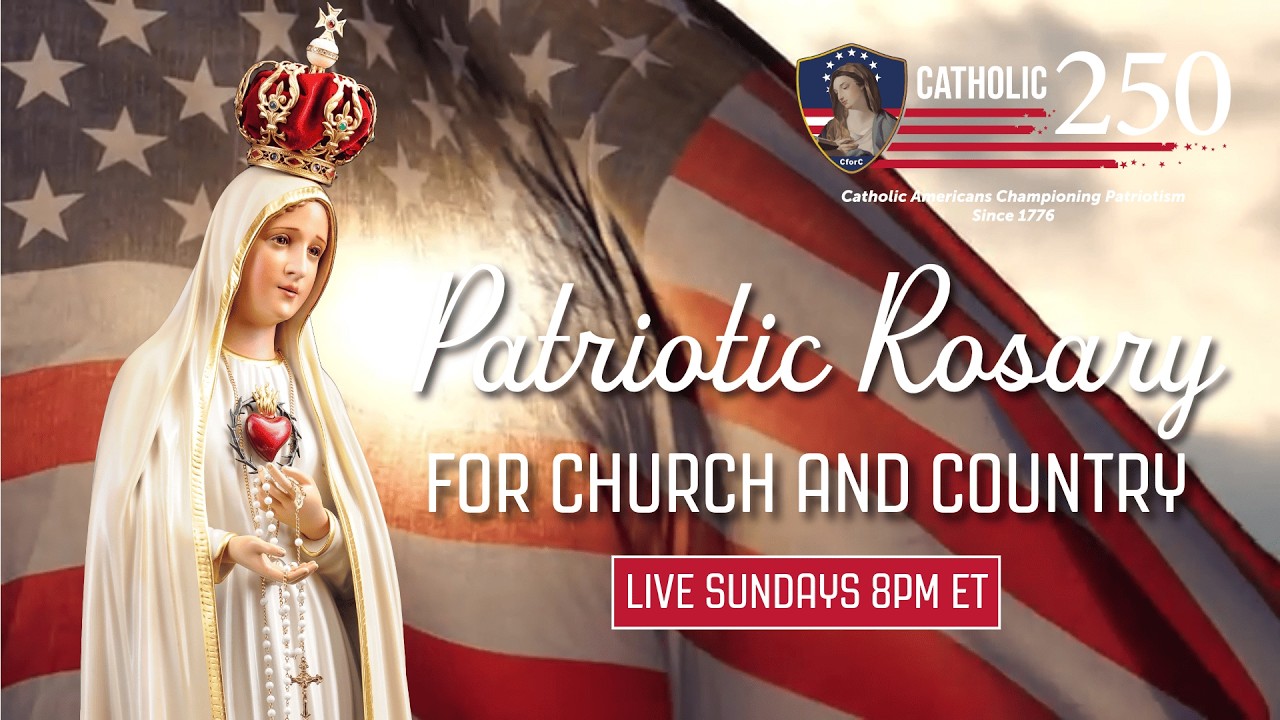
America Needs Fatima is a Catholic campaign in the United States that promotes devotion to Our Lady of Fatima, daily recitation of the Rosary, and public prayer rallies
October Public Square Rosary Rallies: Held annually in October on the Saturday closest to the Miracle of the Sun, with the next rally scheduled for October 16, 2027, at noon local time.
Organized throughout the year around specific themes (such as Pro-Life, Traditional Marriage, and America).
Rally Captains: Volunteers register through Rosary Rally Central to lead public prayer gatherings and access manuals and rally materials in English and Spanish.
Core Practices: The campaign encourages praying the Rosary daily, making the First Saturday Devotion, consecrating oneself to Mary, wearing the Brown Scapular, and offering daily prayers and sacrifices.
Political commentary and media during the 2026 election cycle frequently frame current events as a struggle against "dark forces," though the phrase is used by vastly different groups to describe opposing concerns.
Because the user's statement is a broad observation rather than a specific question, we can look at how this exact language and sentiment have surfaced in political discourse surrounding the recent November 2026 midterm elections:
Religious and Dominionist Framing. Some political commentators point to the rise of spiritual warfare rhetoric within modern campaigns, where political opponents or alleged election issues are explicitly framed as "demonic forces". certain religious-political movements have organized prayer marches and meetings that characterize political battles in apocalyptic terms.
Anti-Authoritarian and Democratic Warnings. Other observers use the language of "dark forces" to warn against what they view as threats to democratic institutions, fascism, or the consolidation of political power. For example, following the November 2026 midterms described recent political discord and institutional challenges as a "struggle taking place behind the scenes between the forces of light and darkness".
Personal and Spiritual Interpretations. Across social media and alternative commentary spaces, the phrase is also used more broadly to connect political frustration with personal stress, societal division, and skepticism toward government authority in general.
Following the November 2026 midterm elections, Democratic Party gains in Congress have sparked sharp political debate over the party's ideological direction and legislative goals. While Republican leaders characterize the incoming Democratic majority as advancing a "communist" or "socialist" agenda, Democratic officials and political analysts emphasize internal divisions within the party and a focus on mainstream economic and social policies.
Republican leaders and conservative commentators frequently argue that progressive factions are driving the Democratic Party toward radical restructuring of the U.S. government.
Warnings of Constitutional Overhaul. House Speaker Mike Johnson and incoming House Republican Leader Jim Jordan have characterized the Democratic agenda as "radical communist" and warned that progressive policies threaten the nation's status as a constitutional republic.
Texas DEI Legislation. NewsOne reported on November 11, 2026, that state legislators in Texas began working to reinstate DEI programs at publicly funded colleges and universities following the election results.
Rhetoric from Democratic Lawmakers. In a November 20, 2026 opinion piece, The New York Times noted that Rep. Ro Khanna (D-California) celebrated the election outcomes as heralding the return of DEI, and pointed to comments from incoming House Speaker-designate Hakeem Jeffries (D-New York) dismissing a group of critics because they were mostly white. [1]
Focus on the DSA Platform. Critics point directly to the platform of the Democratic Socialists of America (DSA)—an organization with several members in Congress—which proposes drafting a new constitution, abolishing the U.S. Senate, and bringing large corporations under public ownership.
Legislative Pushback. In response to the DSA's growing profile, Representative Rich McCormick introduced the Communist Control Act of 2026, a bill aimed at amending Cold War-era legislation to strip the DSA of legal recognition as a political entity.
Focus on Gaza and Foreign Policy. Writing for The Washington Post on November 24, 2026, columnist James Kirchick argued that if a "Woke 2.0" emerges in the next Congress, it will center on activism surrounding Israel and Gaza—citing Sen. Chris Van Hollen's (D-Maryland) challenge to Sen. Chuck Schumer (D-New York) for Senate majority leader based largely on the Gaza issue.
Cultural Critiques. Conservative figures have also criticized Democratic stances on diversity, equity, and inclusion (DEI), transgender rights, and climate policy, framing them as "woke" agendas that undermine traditional American values.
Supporters of Inclusion and LGBTQ+ Rights: According to reporting by The Guardian and The New York Times, LGBTQ+ advocates and groups such as the Human Rights Campaign and Equality PAC oppose restrictions on transgender athletes and warn against policies that single out transgender youth. Some Democratic leaders and candidates, such as Illinois Gov. J.B. Pritzker, have opposed bans.
Economic Debates Over Owning vs. Renting. Some progressive economists and commentators have questioned whether homeownership should remain the primary vehicle for middle-class wealth building, pointing out that high mortgage rates and property costs can make renting and investing in equities more financially advantageous—a view sometimes cited by critics as evidence of shifting attitudes toward ownership.




Comments