
The Catholic Defender: The Catholic Church during the war of 1812

During the War of 1812, the Catholic Church in the United States was a small, institutional outlier in a predominantly Protestant nation, struggling with severe internal priest shortages, geopolitical isolation from Rome, and a complex dual identity split between the U.S. and British Canada.
Institutional Fragility and Isolation from Rome
Captured Pope: Communications between American bishops and the Vatican were entirely cut off.
Pope Pius VII was imprisoned by Napoleon Bonaparte from 1809 to 1814, leaving the young American hierarchy to operate completely on its own.
The Baltimore Diocese: Archbishop John Carroll, the country's first prelate, oversaw a massive territory spanning as far west as the Mississippi River.
He faced an extreme scarcity of clergy, forcing lay Catholics to self-regulate and practice their faith without regular sacraments.
The American Catholic Experience
The Battle of New Orleans:
New Orleans had a heavy Catholic imprint inherited from French and Spanish colonial rule.
Prior to General Andrew Jackson’s victory at the Battle of New Orleans in January 1815, Ursuline nuns famously held an all-night prayer vigil, asking Our Lady of Prompt Succor for an American victory.

Political Ambivalence: Archbishop Carroll was a staunch Federalist who personally opposed the war and held pro-British leanings. However, once war was officially declared, he remained fiercely loyal to the U.S., commanding his pastors to observe national fast days and lead prayers for peace.
War Damaged Parishes: In areas like Alexandria, Virginia, British naval squadrons successfully occupied cities. While historic parishes like Saint Mary Church were not physically burned, their parishioners' businesses were entirely looted.
Enslaved Catholics: The Church was a participant in the institution of slavery, particularly through Jesuit plantations in Maryland. During the war, enslaved Catholics like Harry Mahoney actively protected Church and plantation properties from invading British forces.

The Canadian Catholic Contrast
Alliance with the British Crown: Across the northern border, French-Canadian Catholics in Quebec chose to fight enthusiastically for the British Crown against the invading Americans.
Fear of American Anti-Catholicism: Under the British Quebec Act, Canadian Catholics enjoyed religious autonomy, protected privileges, and the continuation of French civil law. They viewed American republicanism as a threat, particularly since many pro-war U.S. Protestants openly viewed the Catholic Church as the "Antichrist" and sought to "liberate" Canada from it.

Catholics played a defining spiritual, logistical, and military role in the American victory at the Battle of New Orleans on January 8, 1815.
Because New Orleans was historically a French and Spanish colonial territory, the local population was overwhelmingly Roman Catholic, making the Church a central pillar of the city's defense strategy under General Andrew Jackson.
The All-Night Prayer Vigil and "Miracle"
On the night of January 7, 1815, as British forces prepared to assault the city, New Orleans was deeply panicked.
The Vigil: The Ursuline Sisters, joined by a large crowd of local women, children, and citizens, spent the entire night in their chapel on Chartres Street praying for an American victory.
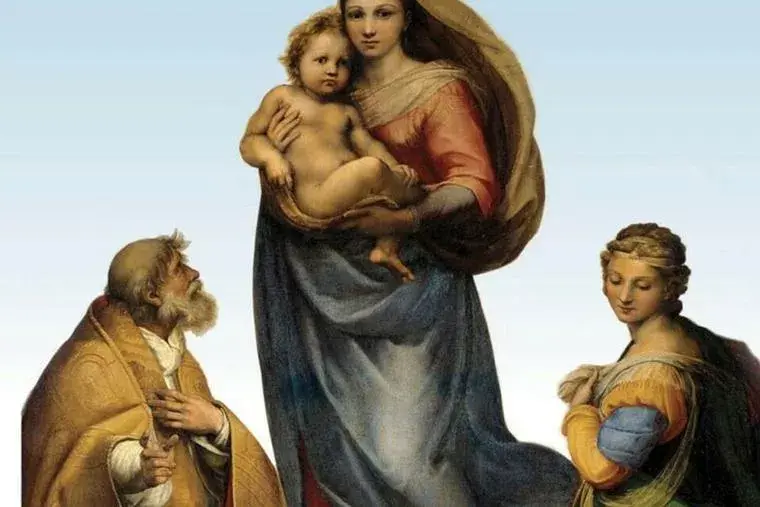
Our Lady of Prompt Succor: The faithful focused their prayers on a statue of the Virgin Mary, known as Our Lady of Prompt Succor ("Quick Help"). The convent’s superior, Mother Ste. Marie Olivier de Vezin, made a solemn vow to God: if the American forces won, the order would sing a Mass of Thanksgiving every year in perpetuity.
The Answered Prayer: On the morning of January 8, while Father (later Bishop) Louis William Valentine DuBourg was offering Mass at the chapel altar, a courier burst through the doors during Communion to announce that the British had been decisively defeated in just 30 minutes.
“As the fire of 1812 threatened New Orleans, the nuns set this statue in their convent window, praying, ‘Our Lady of Prompt Succor, hasten to help us or we are lost.’ The winds quickly changed direction,” writes Jesuit Father David Vincent Meconi of the prayers of the New Orleans Ursuline Nuns
“Then,” he continues, “in the 1815 Battle of New Orleans, General Andrew Jackson defeated a significantly larger British battalion, swearing, ‘The divine providence of God through the intercession of Our Lady of Prompt Succor has shielded us and granted this stupendous miracle.’ After the battle, Jackson thanked the Ursuline Sisters for their prayers and visited them each time he returned to the city.”
2. Civic Leadership of Father DuBourg
Father Louis William Valentine DuBourg, the apostolic administrator of the diocese, was critical in bridging the gap between the fiercely protective local Catholic population and the federal American government.
He publicly urged the historically non-American Catholic population to fully support Jackson’s army against the British.
His leadership helped unify a fragile, culturally divided city behind the American flag.

3. Battlefield and Medical Assistance
Catholic Soldiers: Local French-speaking Catholic Creoles, mixed-race free men of color, and Catholic immigrants from areas like Kentucky formed a significant portion of Jackson’s diverse militia.
The Convent Hospital: Following the battle, the Ursuline Sisters opened the doors of their convent to serve as a makeshift hospital. They treated and nursed both wounded American defenders and captured British soldiers without distinction.
4. General Jackson’s Gratitude and the Te Deum

General Andrew Jackson personally visited the Ursuline convent to thank the sisters for their prayers, famously attributing the lopsided victory to divine intervention.
On January 23, 1815, a massive victory celebration was held at the St. Louis Cathedral. Father DuBourg escorted Jackson into the packed cathedral, where they sang a solemn Te Deum (a traditional Catholic hymn of praise) to formally mark the saving of the city
Historical Legacy
Due to this event, Pope Pius IX officially approved the public devotion to Our Lady of Prompt Succor in 1851, and she was later named the patroness of Louisiana. True to the Mother Superior's 1815 vow, a Solemn Mass of Thanksgiving is still celebrated by the Archdiocese of New Orleans every year on January 8.
Following the spectacular American victory at the Battle of New Orleans, Major General Andrew Jackson’s relationship with the local population quickly deteriorated into a bitter conflict over civil liberties and military rule. While initially celebrated as a national savior, his refusal to lift wartime restrictions alienated the city's residents and leadership
Protracting Martial Law
Obsession with Security: Fearing the British might launch a surprise return attack, Jackson aggressively maintained control over the city's inhabitants.
Refusal to Disband Forces: He forced local citizens and state militiamen to remain in active, grueling service, defying calls from the civilian government to let them return home.
Strict Censorship: Jackson enforced strict curfews and actively censored the local press to stifle growing public dissent.
Clashes with Civilian Leadership
Arrest of a Legislator: When Louisiana state legislator Louis Louaillier published an anonymous letter in March 1815 demanding a return to civilian rule, Jackson had him arrested and jailed for sedition.
Jailing the Judiciary: When federal judge Dominic Augustin Hall issued a writ of habeas corpus to release Louaillier, Jackson retaliated by having his troops arrest and temporarily jail the federal judge as well.
Ignoring Courts-Martial: Jackson refused to release Louaillier even after a formal military tribunal completely acquitted him of the charges.
The Aftermath and Public Reconcile
Contempt Fine: Once official word of the Treaty of Ghent reached the city in mid-March, Jackson finally lifted martial law. Judge Hall immediately returned to his bench, cited Jackson for contempt of court, and fined him $1,000.
Mixed Legacy: Despite the severe political gridlock, a large portion of the working population still deeply admired Jackson. When citizens pooled money to pay his legal fine, Jackson famously refused the money and instructed them to donate it to the widows and orphans of the battle.
His high-handed actions during this period laid the groundwork for lifelong political divisions, forming a major point of debate during his successful runs for the U.S. Presidency.


Comments