
The Catholic Defender: IF JESUS IS GOD, WHY DID HE CRY: “MY GOD, MY GOD, WHY HAVE YOU FORSAKEN ME?”
- Apr 4
- 3 min read
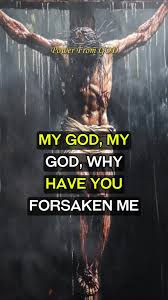
Jenny, thank you for the great question! In Christian theology, the cry “My God, my God, why have you forsaken me?” (Matthew 27:46; Mark 15:34) is understood as the Cry of Dereliction. It does not suggest a literal break in the essence of God, but rather serves several profound theological and prophetic purposes
Jesus was quoting the opening line of Psalm 22. In Jewish tradition, reciting the first line of a Psalm was a way to invoke the entire passage.
Psalm 22 describes a sufferer whose hands and feet are pierced, whose clothes are gambled for, and who is mocked by observers—all of which occurred during the crucifixion.
While the Psalm begins in despair, it ends in total triumph and vindication. By starting the Psalm, Jesus was pointing to its pre-ordained conclusion: God’s ultimate victory.
Jesus Bore the Weight of Sin, a central theological explanation is that Jesus was acting as a substitute for humanity.
Jesus was "made sin for us" (2 Corinthians 5:21), he experienced a judicial withdrawal of the Father’s favorable presence.
This was not "acting"; Jesus truly experienced the horror of human alienation from God caused by sin. He endured the spiritual "forsakenness" that humanity deserves so they wouldn't have to face it themselves.
The doctrine of the Hypostatic Union holds that Jesus is 100% God and 100% man.
In his human nature, Jesus felt the full physical and psychological weight of suffering and abandonment.
Jesus felt forsaken in his humanity, the Trinity was not ontologically "broken". He remained God, but submitted himself to the darkest human experience to redeem it.
Psalm 22, written approximately 1,000 years before the birth of Jesus, contains remarkably specific details that many scholars and believers identify as direct prophecies of the crucifixion, resurrection, and the subsequent global impact of the Messiah's mission.
Jesus famously quoted the first verse from the cross, the "rest" of the psalm provides an intricate preview of the event
The psalm describes onlookers mocking the sufferer, shaking their heads and saying, "He trusts in the Lord; let the Lord rescue him". This was fulfilled word-for-word by the chief priests and elders during the crucifixion.
The sufferer is "poured out like water," with "bones out of joint" and a heart "like wax". Verse 15 describes extreme thirst ("my tongue sticks to my jaws"), which aligns with Jesus' cry of "I thirst" (John 19:28).
The text explicitly states, "they have pierced my hands and my feet". This is noted as particularly significant because it describes the specific method of crucifixion centuries before the practice was common or even invented.
The psalm uniquely predicts two separate actions: "They divide my garments among them and cast lots for my clothing". This was fulfilled when Roman soldiers divided Jesus' outer clothes but cast lots for his seamless inner tunic.
The psalm abruptly shifts from a lament of death (v. 21) to a declaration of victory and praise (v. 22), which many interpret as a prophecy of the resurrection.
The sufferer vows to "tell of your name to my brothers". This is quoted in Hebrews 2:12 as a reference to Jesus' relationship with his followers after the resurrection.
It predicts that "all the ends of the earth will remember and turn to the Lord" and "all the families of the nations will bow down before him". This is seen as a prophecy of the spread of Christianity to the Gentile nations.
The final verses speak of a "posterity" and "future generations" being told of the Lord's righteousness.
"It is Finished" (v. 31): The very last phrase of the psalm in Hebrew conveys "He has done it," which many link to Jesus' final words on the cross, "It is finished" (John 19:30).
"Messianic Trilogy" most commonly refers to several distinct literary or biblical sets that explore the life and role of the Messiah. The term is most frequently applied to a collection of Psalms
group Psalms 22, 23, and 24 together as a "Messianic Trilogy" because they chronologically depict the three roles of Jesus Christ as the Shepherd
Psalm 22 (The Good Shepherd): Focuses on the Cross and the Messiah’s suffering/death.
Psalm 23 (The Great Shepherd): Focuses on the Crook (the shepherd’s staff) and His present care for His people.
Psalm 24 (The Chief Shepherd): Focuses on the Crown and His future return as King.
Anticipating the Advent: Examines Old Testament promises and the circumstances of the Messiah's birth.
Messiah’s Ministry: Covers the period between His baptism and transfiguration.


Comments