
The Catholic Defender: Friday the 13th in history
Friday the 13th is a widely known superstition in Western cultures, combining long-standing taboos associated with both the number 13 and the day Friday.
Norse Mythology: The unluckiness of 13 is often traced to a Valhalla banquet where Loki—the 13th guest—tricked the blind god Höd into killing Balder.
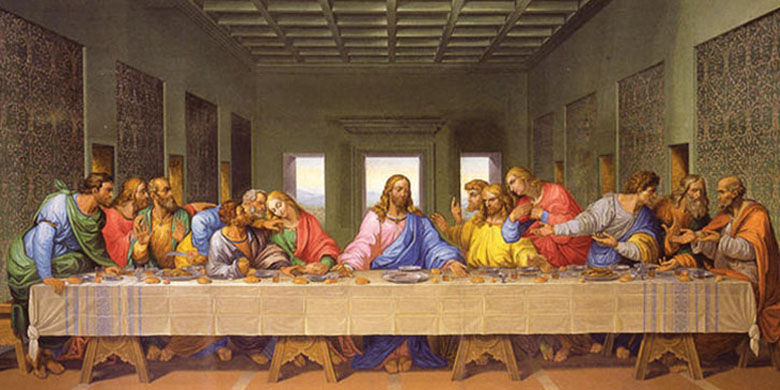
Christian Tradition: In Christianity, 13 represents the 13 guests at the Last Supper (Jesus and his 12 apostles), with Judas Iscariot viewed as the 13th and betraying guest before Good Friday. Fridays have also long been associated with sorrow as the traditional day of Christ's crucifixion.
The Knights Templar (October 13, 1307): On Friday, October 13, 1307, King Philip IV of France ordered the mass arrest and subsequent execution of the Knights Templar, an event some pop-culture narratives link to the date's gloomy reputation.
Literature and Film: The superstition was heavily popularized in modern times by Thomas W. Lawson's 1907 novel Friday, the Thirteenth, which featured a broker causing a Wall Street panic on that day, and later cemented in horror history by the 1980 release of the film Friday the 13th featuring Jason Voorhees.
October 13, 1307: Arrests of the Knights Templar by King Philip IV.
September 1940: The German bombing of Buckingham Palace.
March 1964: The murder of Kitty Genovese in Queens, New York
November 1970: A devastating cyclone in Bangladesh that killed over 300,000 people.
October 1972: The crash of a Uruguayan/Chilean Air Force plane in the Andes.
September 1996: The death of rapper Tupac Shakur.
January 2012: The capsize and crash of the Costa Concordia cruise ship off the coast of Italy
According to biblical tradition, 13 guests attended the Last Supper, held on Maundy Thursday, including Jesus and his 12 apostles (one of whom, Judas, betrayed him). The next day, of course, was Good Friday, the day of Jesus’ crucifixion.
The seating arrangement at the Last Supper is believed to have given rise to a longstanding Christian superstition that having 13 guests at a table was a bad omen—specifically, that it was courting death.
Though Friday’s negative associations are weaker, some have suggested they also have roots in Christian tradition: Just as Jesus was crucified on a Friday, Friday was also said to be the day Eve gave Adam the fateful apple from the Tree of Knowledge, as well as the day Cain killed his brother, Abel.
The Catholic crusaders were apprehended, under pressure from Pope Clement V, over allegations made by an excommunicated former member that new recruits to the order were being forced to spit on the cross, deny Christ and engage in homosexual acts during initiation ceremonies.
The claims, seemingly entirely without foundation, were a convenient pretext for Philip to persecute the wealthy order and waive debts he owed them following war with England.
Charged with moral and financial corruption and worshipping false idols, often following confessions obtained under torture, many of the knights were later burnt at the stake in Paris.

The order’s Grand Master, Jacques de Molay, faced the flames in front of Notre Dame Cathedral and is said to have cried out a curse on those who persecuted its members: “God knows who is wrong and has sinned. Soon a calamity will occur to those who have condemned us to death.”
The events initiated by the holy warriors’ arrest, according to tradition, ensured every subsequent Friday the 13th meant bad luck to one and all, De Molay’s hex ringing out through the ages.
𝗠𝗮𝗿𝗰𝗵 𝟭𝟭, 𝟭𝟯𝟭𝟰 — 𝗧𝗵𝗲 𝗟𝗲𝗴𝗮𝗰𝘆 𝗼𝗳 𝗝𝗮𝗰𝗾𝘂𝗲𝘀 𝗱𝗲 𝗠𝗼𝗹𝗮𝘆
On this day, 𝗝𝗮𝗰𝗾𝘂𝗲𝘀 𝗱𝗲 𝗠𝗼𝗹𝗮𝘆, the last Grand Master of the Knights Templar, was executed in Paris. Even in the face of death, he refused to betray his brothers or the principles he believed in. His courage and loyalty became a lasting symbol of honor and conviction.
More than 600 years later, his name was chosen for one of the greatest youth leadership organizations connected to Freemasonry — 𝗧𝗵𝗲 𝗢𝗿𝗱𝗲𝗿 𝗼𝗳 𝗗𝗲𝗠𝗼𝗹𝗮𝘆.
Founded in 1919, 𝗗𝗲𝗠𝗼𝗹𝗮𝘆 𝗜𝗻𝘁𝗲𝗿𝗻𝗮𝘁𝗶𝗼𝗻𝗮𝗹 has helped shape generations of young men into leaders of character, teaching lessons in respect, integrity, patriotism, and service. Many Masonic and community leaders first learned those values as members of DeMolay.
Today the Masons remember 𝗝𝗮𝗰𝗾𝘂𝗲𝘀 𝗱𝗲 𝗠𝗼𝗹𝗮𝘆 — and celebrate the powerful legacy carried forward through the great work of 𝗗𝗲𝗠𝗼𝗹𝗮𝘆.
Long Illness: Clement V suffered from severe, prolonged illness (believed to be bowel cancer or a similar severe gastrointestinal disease) and died in Roquemaure, France, at age 49.
Bizarre Funeral Accident: During his funeral vigil in Carpentras, an inverted or falling candle set fire to the catafalque (the raised platform holding his casket), severely charring his corpse.
The "Curse" Legend: According to popular medieval legend, Jacques de Molay cursed both Pope Clement V and King Philip IV of France from the stake, summoning them to face God's judgment within a year.
Historical Reality of the "Curse": While historical records show no contemporary documentation of a formal curse spoken at Molay's execution, the rapid sequence of deaths fueled the myth: Clement V died on April 20, 1314, and King Philip IV died months later on November 29, 1314.
The Catholic Church views curses, including the legendary dying curse attributed to Jacques de Molay (the last Grand Master of the Knights Templar), as superstitious, sinful, and lacking any real spiritual power over God's divine justice.
Superstition and Sin: The Catechism of the Catholic Church classifies cursing, hexes, and attempts to use magic or supernatural power to harm others as a violation of the First Commandment. It treats them as forms of superstition that lack faith in God's providence.
No Power Over God: Catholic theology holds that human beings cannot invoke a magical or binding "curse" that forces God or the universe to execute someone. While a dying person may appeal to God for justice or vengeance (as Molay allegedly called King Philip IV and Pope Clement V to answer before the divine tribunal), the outcome rests entirely with God's judgment, not human malediction.
Historians view the famous "curse" of Jacques de Molay—where he allegedly predicted the deaths of Pope Clement V and King Philip IV within a year and a day—as a dramatic or apocryphal legend rather than a supernatural event validated by the Church. Both men did die shortly after the trials and executions (Clement V within a month, Philip IV later that year), and popular folklore romanticized it as a curse, but the Church does not recognize or endorse curses as active spiritual mechanisms.
Order of DeMolay: The modern youth organization named after Jacques de Molay is sponsored by Freemasonry.
The Catholic Church officially forbids Catholics from joining Freemasonry or affiliated groups like the Order of DeMolay, deeming them incompatible with Catholic doctrine due to secret oaths and naturalistic philosophies.
The Catholic Church considers Freemasonry incompatible with Catholic doctrine because Freemasonry functions as a parallel, naturalistic religion that promotes indifferentism, requires problematic secret oaths, and historically opposed the Church.
This stance is not a relic of the past; it was explicitly reaffirmed by the Vatican Dicastery for the Doctrine of the Faith with the approval of Pope Francis. According to the foundational 1983 Declaration on Masonic Associations signed by Cardinal Joseph Ratzinger (later Pope Benedict XVI), Catholics who join Masonic lodges are in a state of grave sin and may not receive Holy Communion.
The Conflict: Freemasonry embraces the philosophy of religious indifferentism—the belief that all religions are equally valid pathways to God and that a person can be equally pleasing to God regardless of their faith.
The Church’s Stance: Catholicism teaches that Jesus Christ is the unique and definitive revelation of God, and that the Church possesses the fullness of truth and the means of salvation. For a Catholic, treating Jesus as merely one of many historical moral teachers or prophets is a denial of his divinity.
The Conflict: Masonry requires members to believe in a supreme being, frequently addressed in rituals as the "Great Architect of the Universe". This concept is inherently deistic and strips away the personal, triune nature of God.
The Church’s Stance: The Church teaches that God is a loving, personal Father who intervenes in human history, is fully revealed in the Holy Trinity, and offers salvation through grace. The Masonic framework treats specific dogmas regarding the Trinity and the Incarnation as secondary or irrelevant to a member's spiritual life.
The Conflict: To advance through Masonic degrees, candidates must swear solemn oaths of secrecy. Historically, these oaths included symbolic, graphic penalties if the secrets were violated.
The Church’s Stance: The Church views taking an oath—invoking God's name as a witness to a promise—with extreme seriousness. Swearing absolute blind obedience to a secret society and its hidden leaders before knowing what will be asked is considered a violation of Christian moral responsibility and the First Commandment.
The Conflict: Freemasonry functions as a moral system that teaches humans can perfect themselves, attain enlightenment, and earn a reward in the afterlife purely through natural virtue, good deeds, and fraternal rituals.
The Church’s Stance: This represents "naturalism," a philosophy condemned heavily by Pope Leo XIII in his 1884 encyclical Humanum Genus. Catholic theology holds that salvation is entirely a free gift of God's grace achieved through the redemption of Jesus Christ, which cannot be earned through human moral striving alone.
The Conflict: While Anglo-American Freemasonry often presents itself primarily as a fraternal and charitable organization, continental European and Latin American lodges historically engaged in aggressively anti-clerical, secularist political campaigns aimed at stripping the Church of its schools, properties, and societal influence.
The Church’s Stance: Because the underlying philosophical principles remain the same across global branches, the Vatican maintains a universal ban, stating that local bishops cannot override the global prohibition.
Between the 1917 and 1983 editions of the Code of Canon Law, the Catholic Church removed the explicit mention of Freemasonry and replaced the automatic penalty of excommunication with a broader, more generalized sanction.
This vocabulary shift caused significant confusion, prompting the Vatican to issue an immediate, binding clarification stating that the legal changes did not alter the Church's absolute ban on Masonic membership.


Comments