
The Catholic Defender: St. Peter given the keys similar to Isaiah 22:22
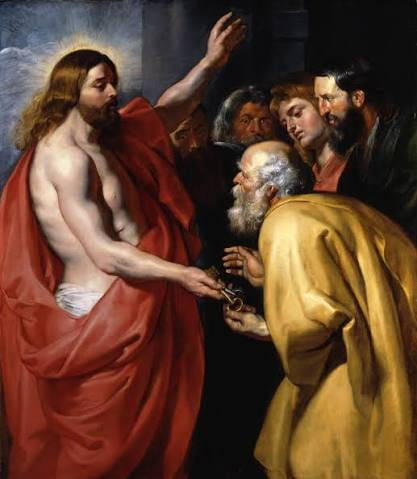
The connection between St. Peter receiving the keys in the New Testament and the prophecy in Isaiah is one of the most famous examples of biblical typology. Scholars and theologians—particularly in Catholic apologetics—point to Isaiah 22 as the direct Old Testament blueprint for Jesus giving Simon Peter the "keys of the kingdom" in Matthew 16.
Isaiah 22:22 (The Old Covenant): "I will place "I will place on his shoulder the key to the house of David; what he opens no one can shut, and what he shuts no one can open."
Matthew 16:19 (The New Covenant): "I will give you the keys of the kingdom of heaven; whatever you bind on earth will be bound in heaven, and whatever you loose on earth will be loosed in heaven."
In Isaiah 22, King Hezekiah rules the kingdom, but he employs a chief official known as the Master of the House (Al-Habyit in Hebrew) or Prime Minister. The previous minister, Shebna, was corrupt, so God declared he would strip Shebna of his robes and authority, handing the office over to a faithful servant named Eliakim, son of Hilkiah.
The "key to the house of David" was a literal and symbolic object worn on the shoulder. It signified that while the King held ultimate sovereignty, the Prime Minister had the authority to run the day-to-day affairs of the kingdom, govern the royal palace, and speak with the absolute authority of the king when the king was absent.
Jesus as the Davidic King: By evoking Isaiah 22, Jesus establishes Himself as the ultimate King of the House of David who has come to restore His kingdom.
Peter as the Prime Minister: In this parallel, Peter is not being made the king; rather, he is appointed as the vicar or chief minister of Christ’s newly established Church. The keys signify delegated, dynastic authority to govern on the King's behalf.
The Power to Bind and Loose: Just as Eliakim had the final say in opening and shutting the palace gates, Peter is given supreme administrative and judicial authority ("binding and loosing") within the Church.
The Concept of Succession: A central element of Isaiah 22 is that the office outlives the man. When Shebna fails, the office and the keys are passed down to Eliakim. Proponents of the Papacy argue that Jesus intended for Peter's unique office to possess a similar dynamic of continuous apostolic succession.


Comments